A free math program for children aged 7–9 with ADHD
Every child has their own route through math
MathRoutes helps children aged 7–9 with ADHD (attention-deficit/hyperactivity disorder) learn math through interactive cards they color, draw on, cut out and arrange.
The project
What is MathRoutes?
MathRoutes is a free math program for children aged 7–9 with ADHD. At its heart is a set of interactive cards: children color them, draw on them, cut them out and lay them out — and learn math along the way.
Why “Routes”?
A route is a way of getting somewhere. In math there is no single road that suits everyone. Every child has a route of their own — and our job is to help find it.
The problem
A little hurricane in a math lesson
A child with ADHD is like a little hurricane. A hundred thoughts at once. Hands that want to hold something, feet that want to run, eyes that want to discover something new.
Now picture an ordinary math lesson: long columns of numbers on the board, the same exercises over and over, a clock that barely moves. The teacher explains the topic once — and at that very moment the child was watching a bird outside the window.
The class moves on. The child falls behind, and the distance between them and math grows a little every day. Adults say: “not paying attention”, “lazy”, “not interested”.
But the child isn't struggling because they lack energy. They're struggling because their energy has nowhere to go.
If you can't stop a hurricane, maybe you can give it a direction?
Don't fit the child to math. Fit math to the child.
Methodology
How we fit math to the child
MathRoutes rests on one idea: change the path, not the child. Six principles turn that idea into everyday practice — at the table, at the wall and in the courtyard.
Learning with your hands
Children color, draw, cut out, arrange and build. Math becomes something you can touch and move, not just listen to.
In practice: every card asks the hands to do something.
Short steps
One task, one step, a few minutes. A long road looks like a mountain; short steps look like a staircase.
In practice: a card takes a few minutes; a lesson lasts about an hour, made of many short steps.
Something new every time
For a child with ADHD, novelty is like oxygen. The cards keep changing: one asks you to look closely, another to build, a third to finish a story.
In practice: coloring, connecting, patterns, towers, stories.
The child chooses
Choice sparks interest, interest brings attention, and attention is the key to learning.
In practice: the child picks the next card themselves.
A predictable rhythm
Every meeting follows the same order. A clear, familiar routine gives a sense of safety: nothing comes as a surprise.
In practice: warm-up → the mentor shows → less help → on my own → “What helped?”
Energy needs room
We don't try to stop the hurricane — we give it a direction. Movement is part of learning, not a break from it.
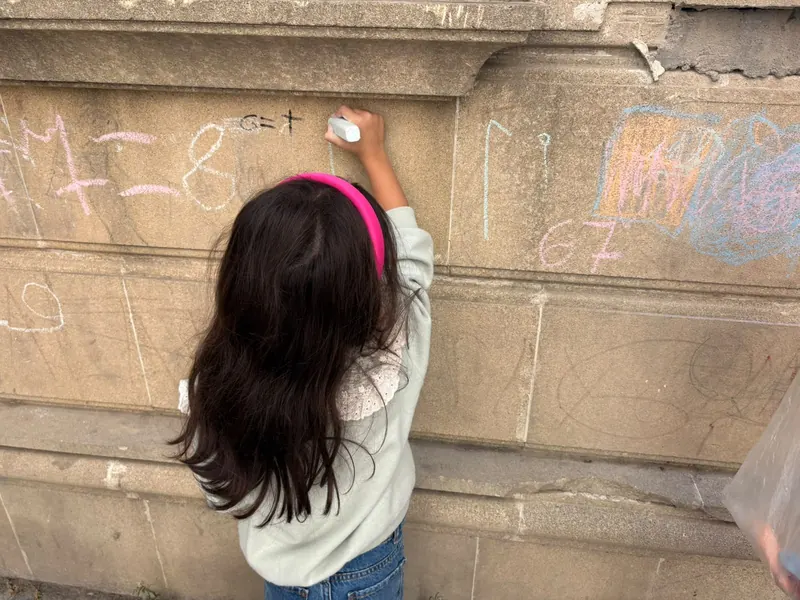
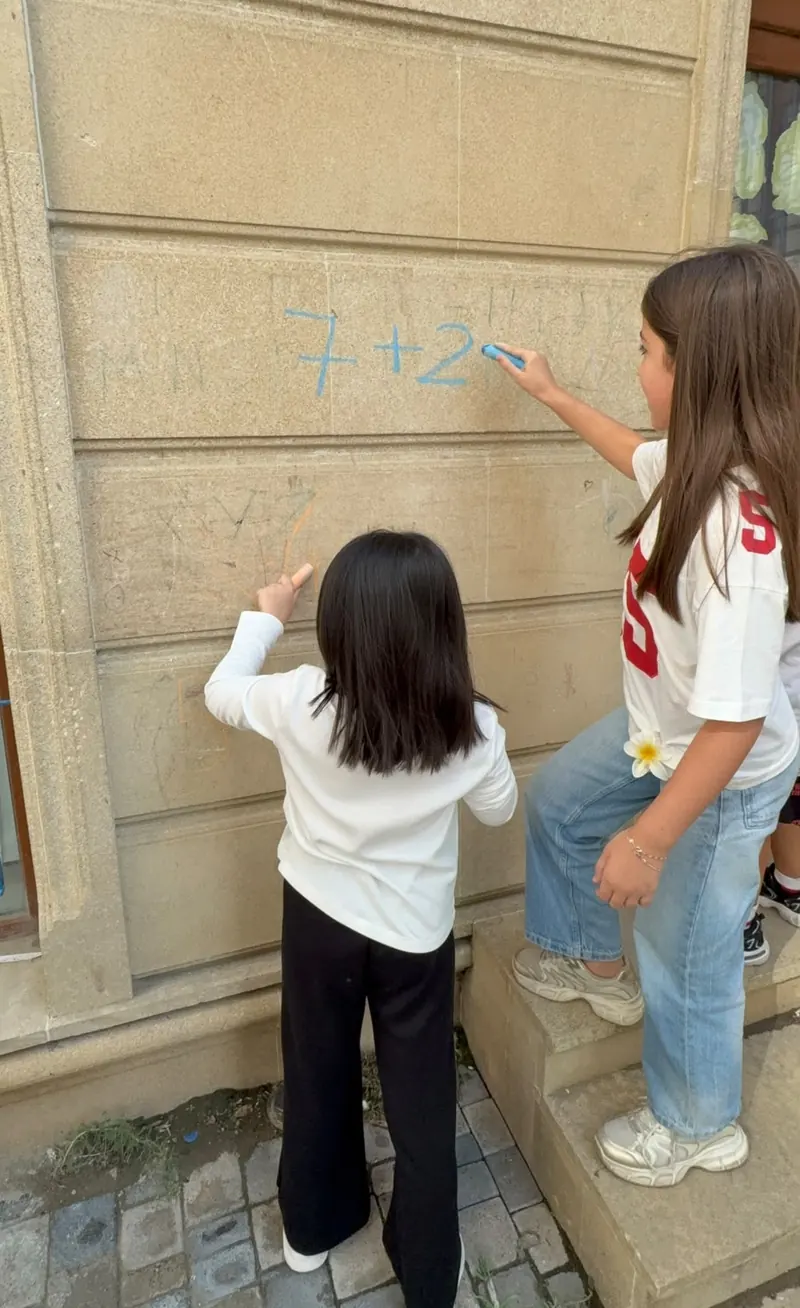
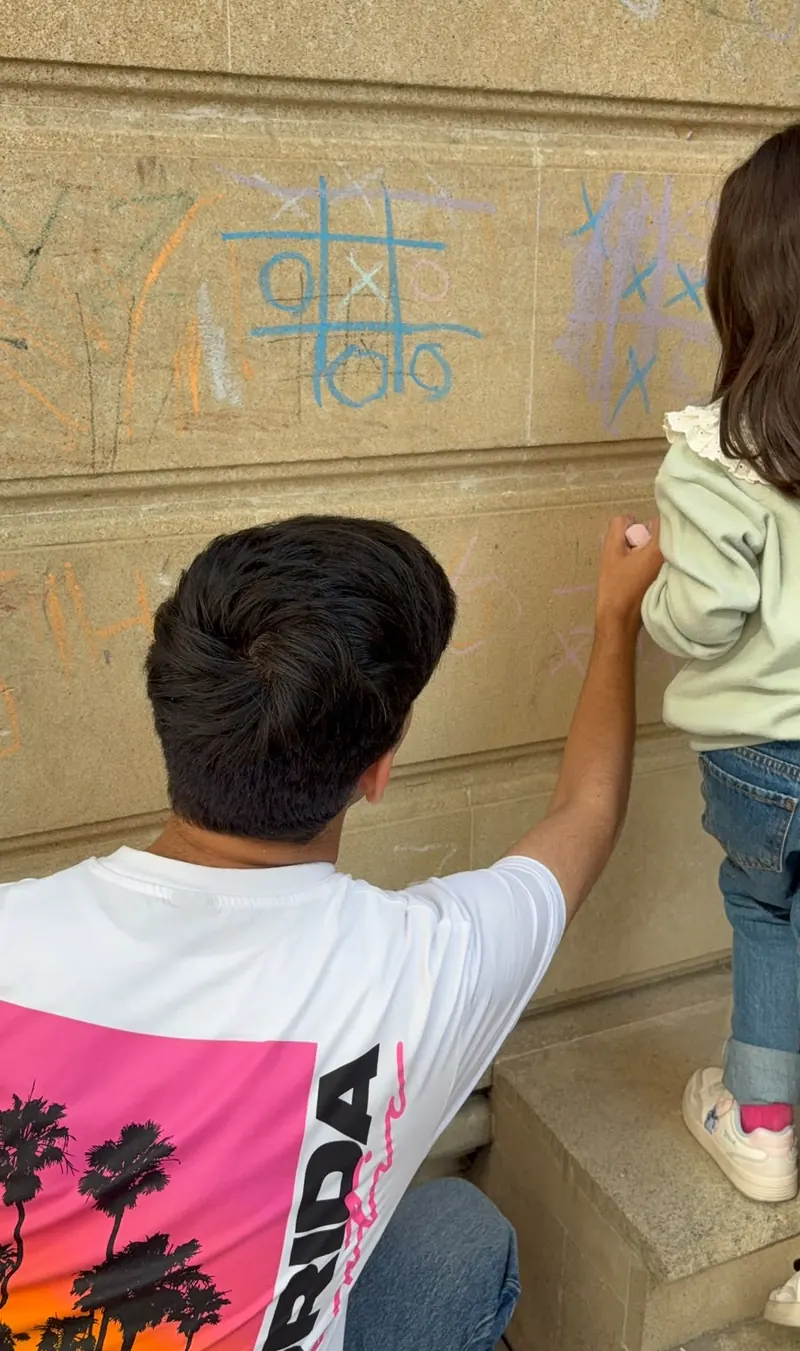
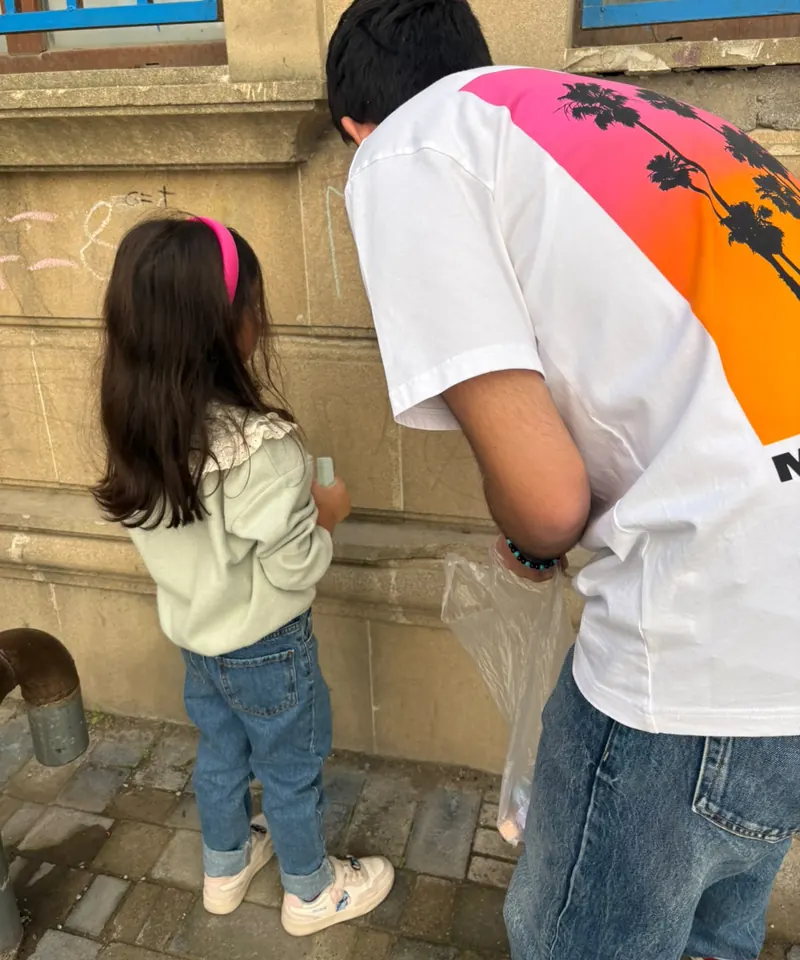
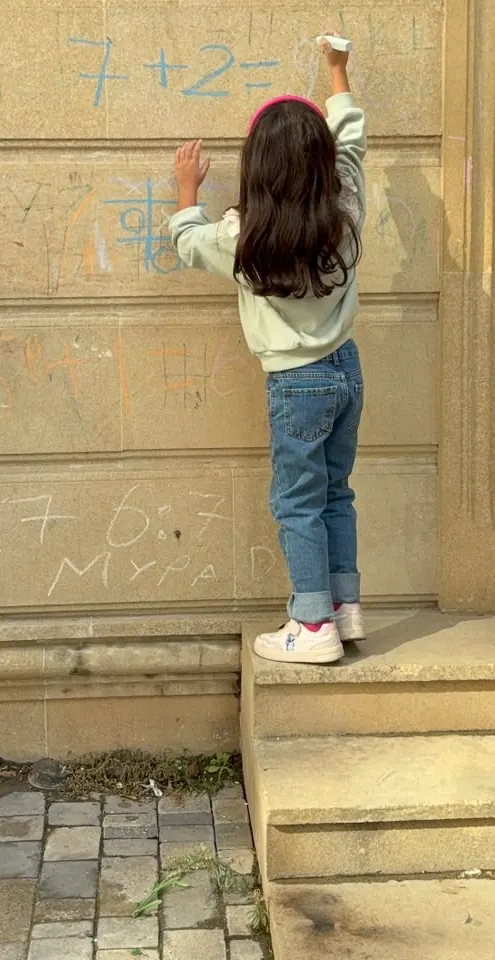
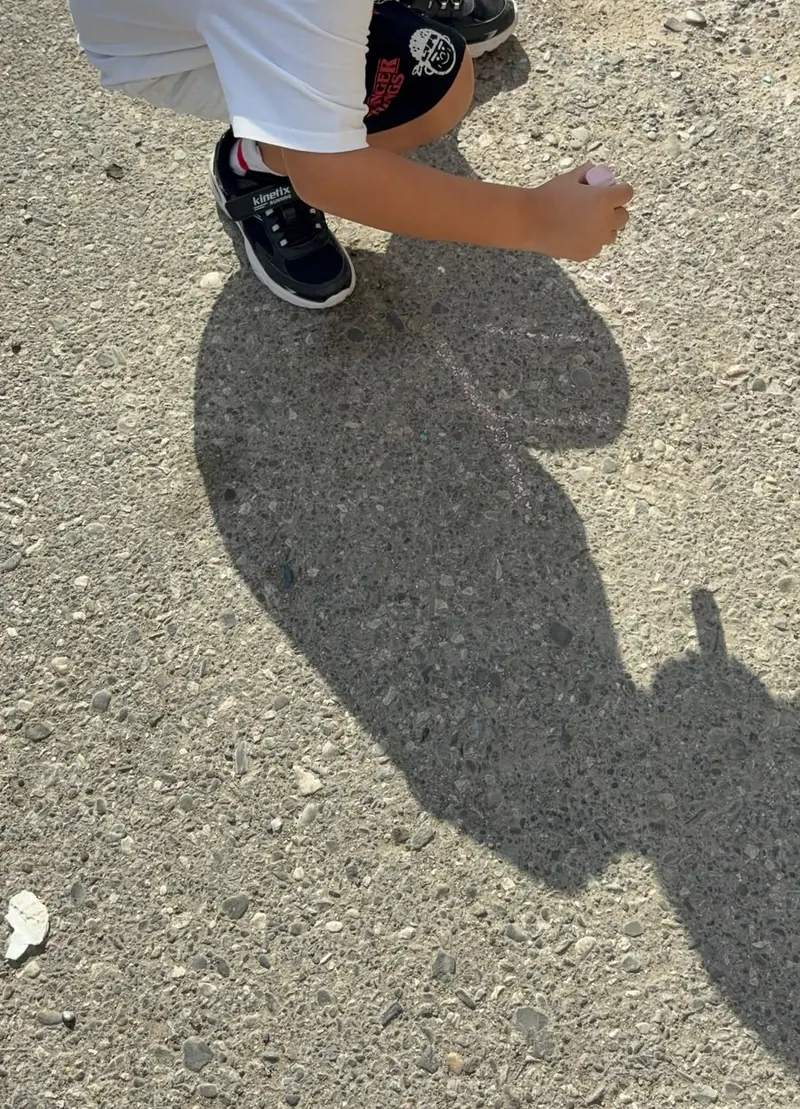
In practice: every meeting starts with a warm-up, and math can move outside — onto walls and pavements, in chalk.
Help that steps back
Support doesn't vanish all at once. It steps back gradually, until the child can manage alone.
The mentor's notebook
A mentor works like an explorer, watching closely to find what helps this particular child most.
- Coloring?
- Building?
- Moving?
→ every child has their own key
What changes
| In a typical lesson | At MathRoutes |
|---|---|
| Long columns of numbers on the board | Numbers hidden inside pictures and stories |
| The topic is explained once, and the class moves on | The mentor shows once, then help steps back gradually |
| 45 minutes of sitting still | About an hour — with a warm-up, movement and short cards |
| The same kind of exercise again and again | Different kinds of cards: look, build, finish a story |
| “Not paying attention”, “lazy” | Energy that needs a direction |
Cards that keep learning
The cards aren't final. They're being reworked based on feedback from the children, mentors and teachers.
- Children
- Mentors
- Teachers
- Cards
The cards
Paper doors
At first glance they're ordinary sheets of paper. But every card is a door into a small world. Children add, balance and divide — yet it feels like a game, not a lesson. The numbers aren't lined up in dull columns; they hide inside pictures and stories.
Color it
Pictures to color in, with numbers hidden inside.
Connect it
Paths to join up, from one point to the next.
Complete it
Patterns waiting for their missing pieces.
Build it
Towers to build with your own hands.
Solve it
Little stories that need an ending.
Novelty is like oxygen
No two cards are alike: one asks you to look closely, another to build something with your hands, a third to find how a story ends. For a child with ADHD, something new is like oxygen.
A staircase, not a mountain
Every card is short: one task, one step, a few minutes. A long road looks like a mountain to a child like this. Short steps look like a staircase.
Anatomy of a card
- One task, clear from the very first line.
- Numbers hidden inside a picture or a story.
- Something for the hands: color, draw, cut out, arrange.
- A few minutes — and then a small victory.
What's on the table (and in the courtyard)
- Paper cards
- Colored pencils and felt-tip pens
- Scissors
- Chalk
- A ball
The program
How the program works
This is how the program ran over several months.
- Severalmonths
- Smallgroups
- ~1hour per lessonEnough time to warm up, work with the cards, move around and finish a card on your own.
Every meeting has the same rhythm
A clear, familiar order gives children a sense of safety.
-
Warm up
The child relaxes and gets moving.
-
Watch once
The mentor shows the task once, and the child starts working with the cards.
-
Less and less help
Support is gradually reduced.
-
All by myself
At the end, the child solves one card completely on their own.
-
What helped?
The meeting ends with one question: “What helped you today?”
The main rule: the child chooses the card
- Choice
- Interest
- Attention
- Learning
Choice sparks interest, interest brings attention, and attention is the key to learning.
Every finished card is a small victory. And small victories grow into big confidence.
Mentors
Explorers, not teachers
Sessions are led by trained school-age mentors, with a teacher present at every meeting.
An explorer's eye
A mentor doesn't lecture. They watch closely to find out what helps this particular child most: coloring, building or moving. Every child has their own key.
Why school students?
Children listen more easily to someone close to their own age. Like an older brother or sister, a mentor shows that math isn't scary.
Gallery
From the table to the courtyard
Math doesn't have to stay in one place. Here is what it looks like at the table, up close, and outside.
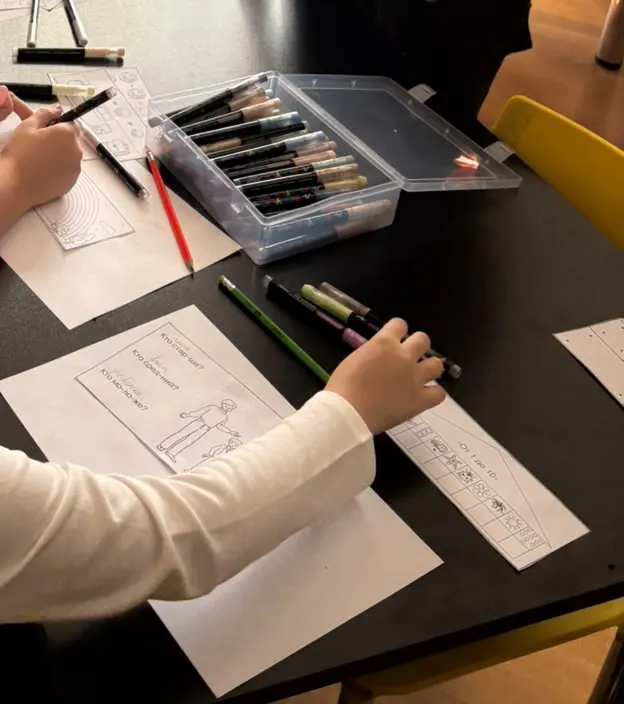
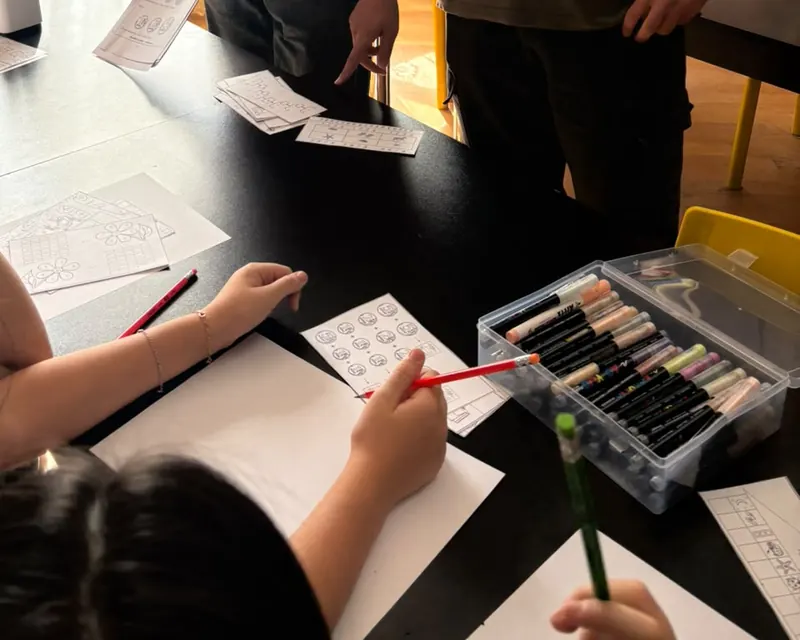
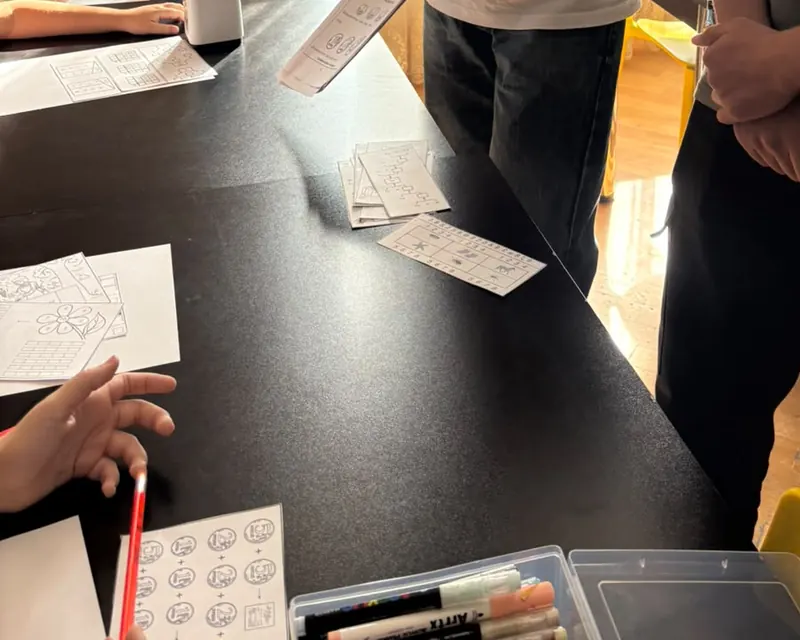
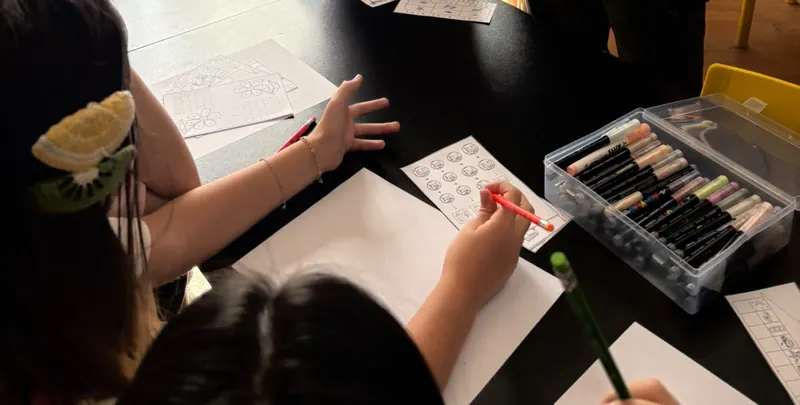
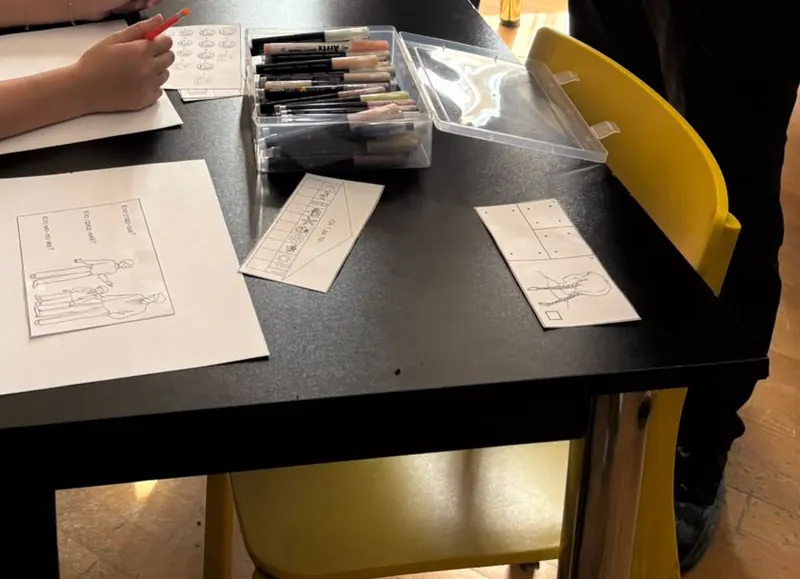
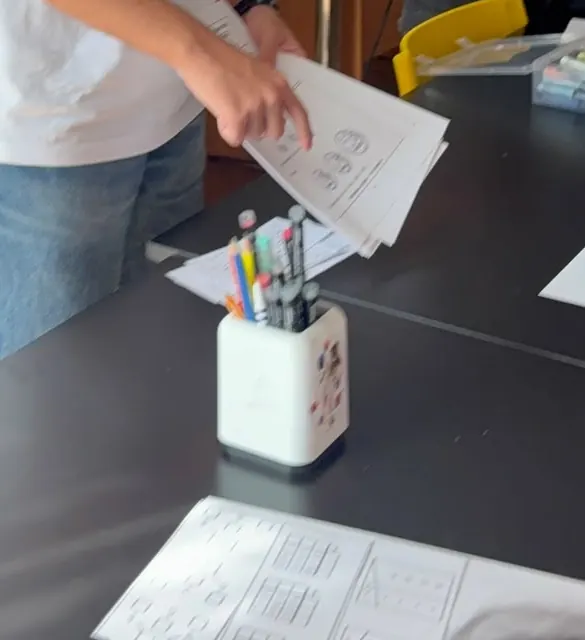
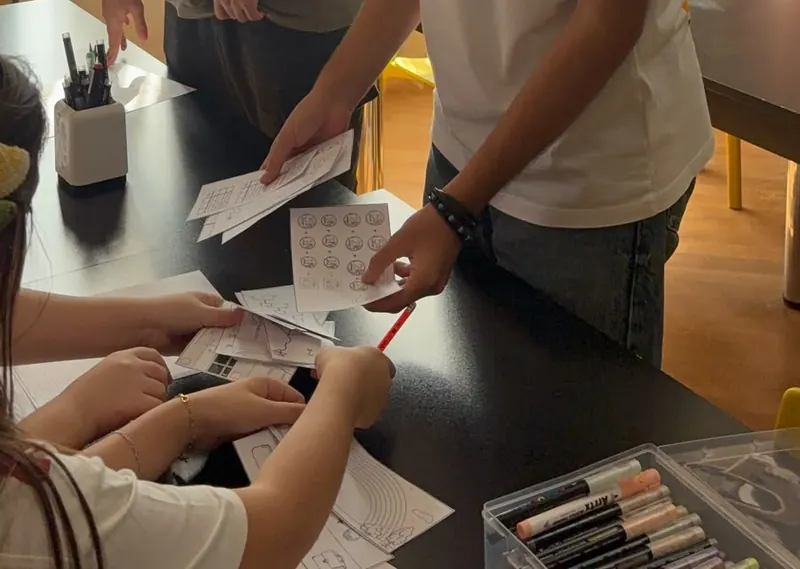
At the table
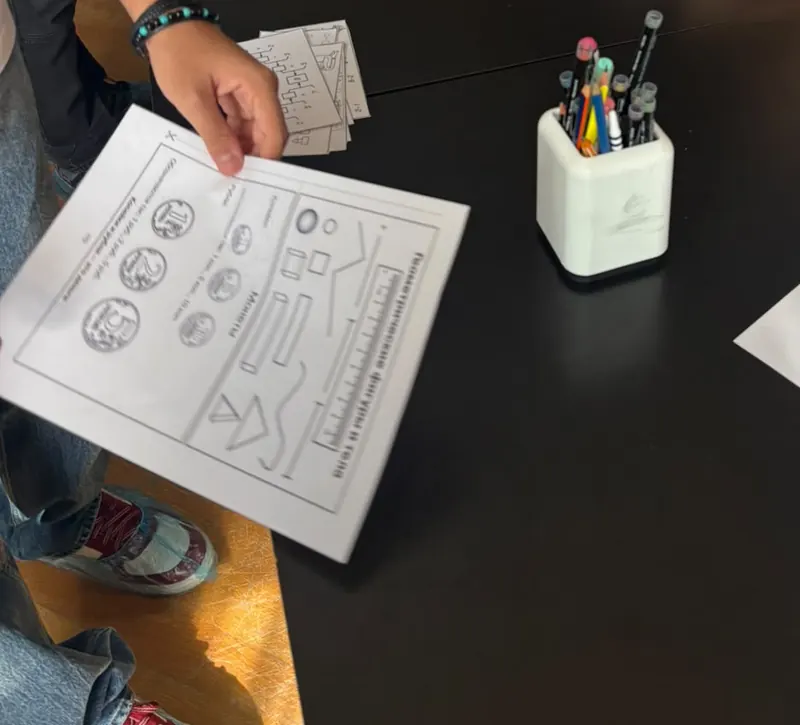
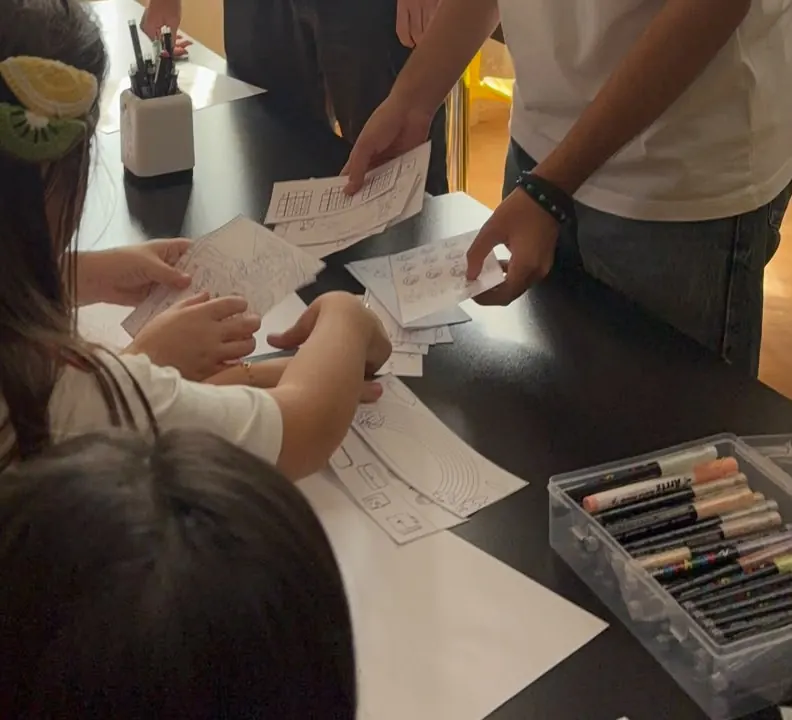
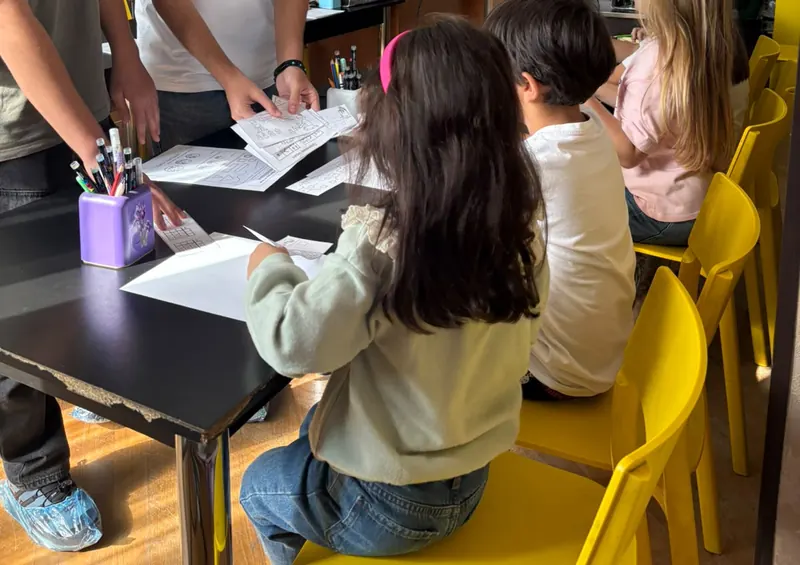
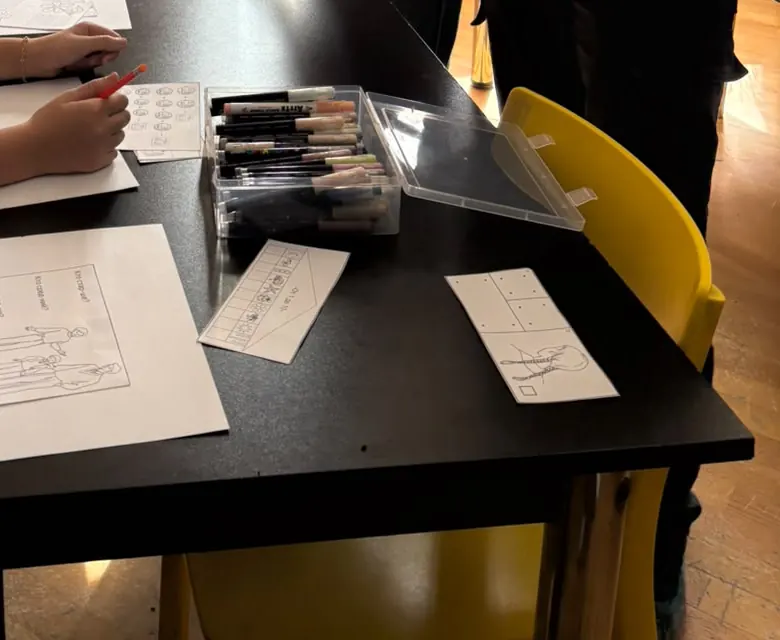
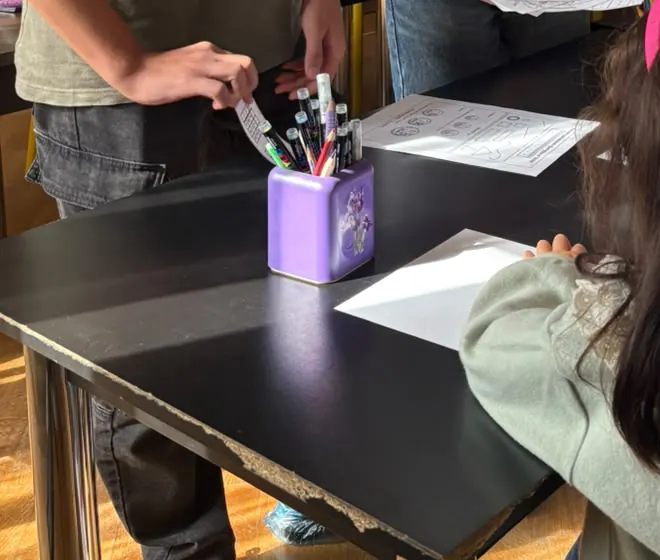
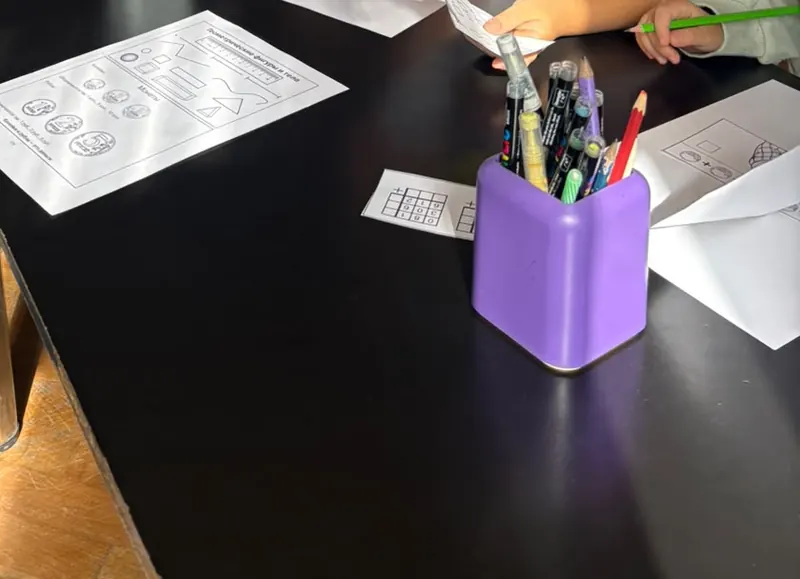
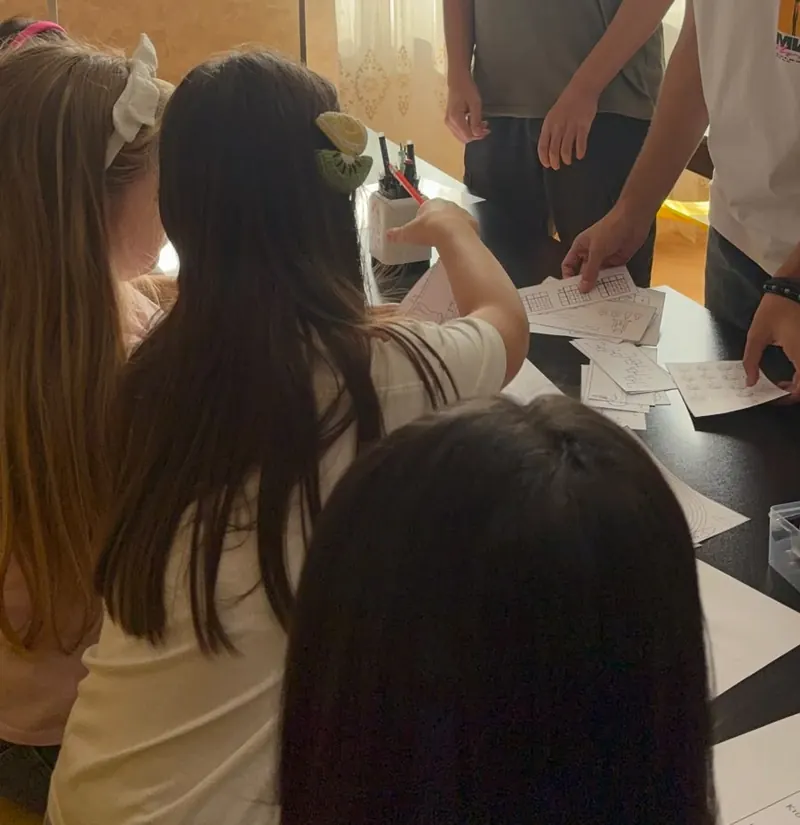
Cards, markers and a mentor close by.
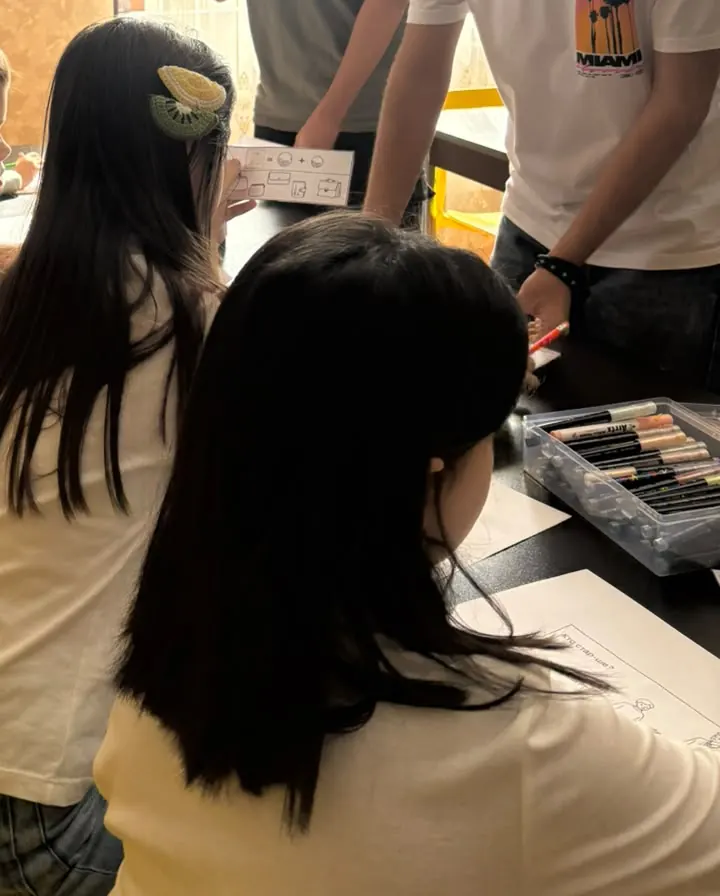
everyone at the table 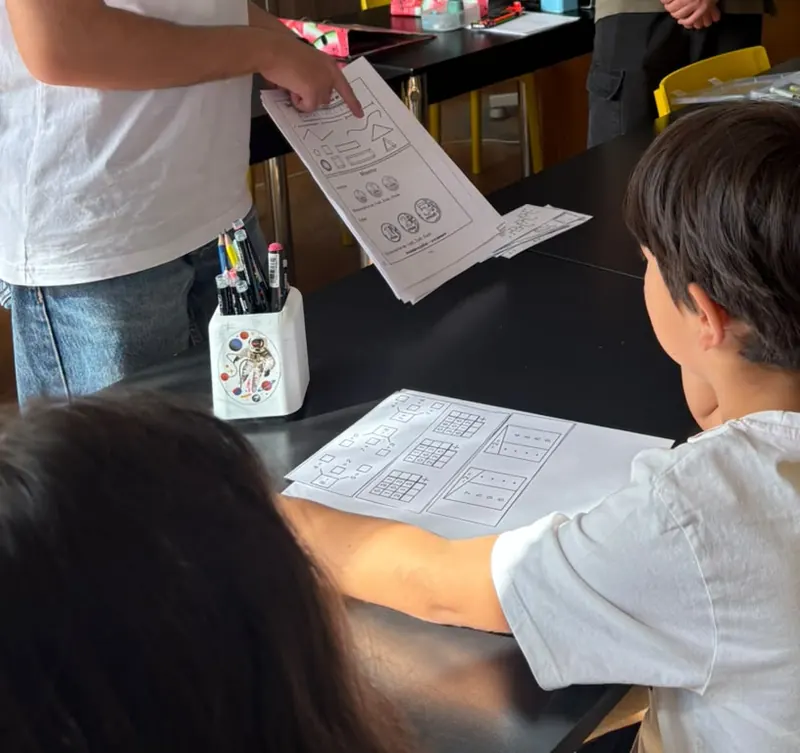
the mentor shows the card once 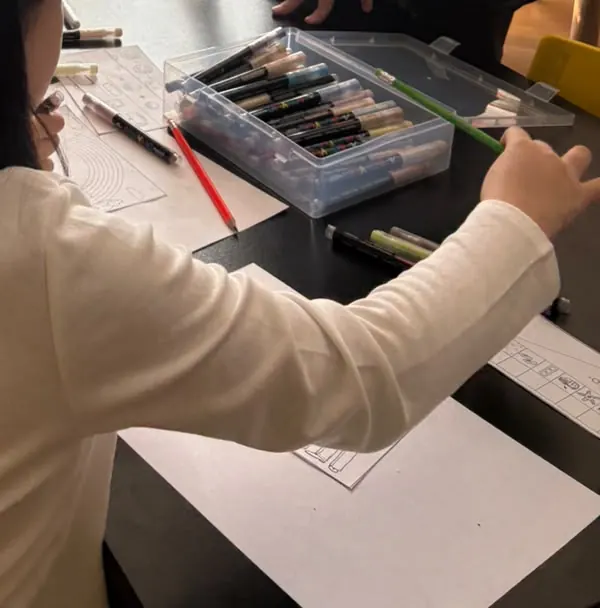
markers at the ready
Up close: the work
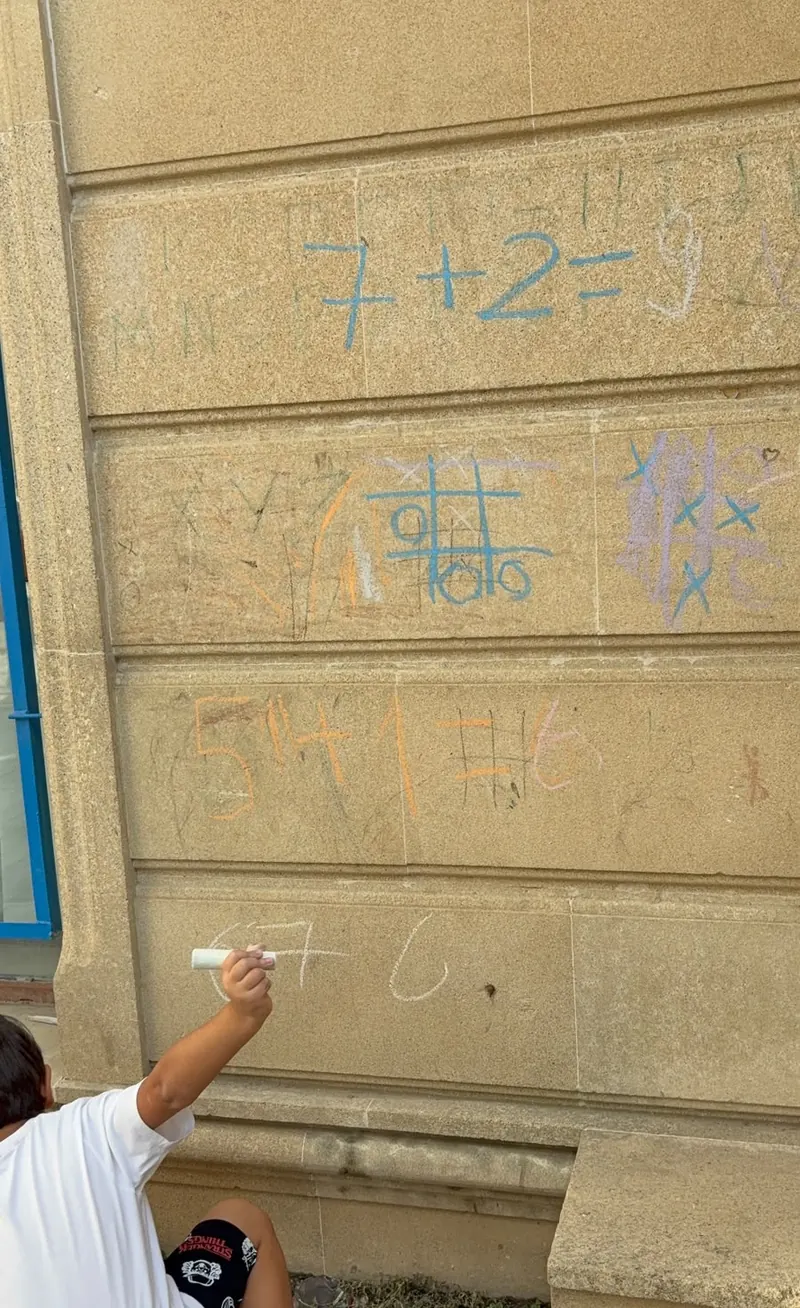
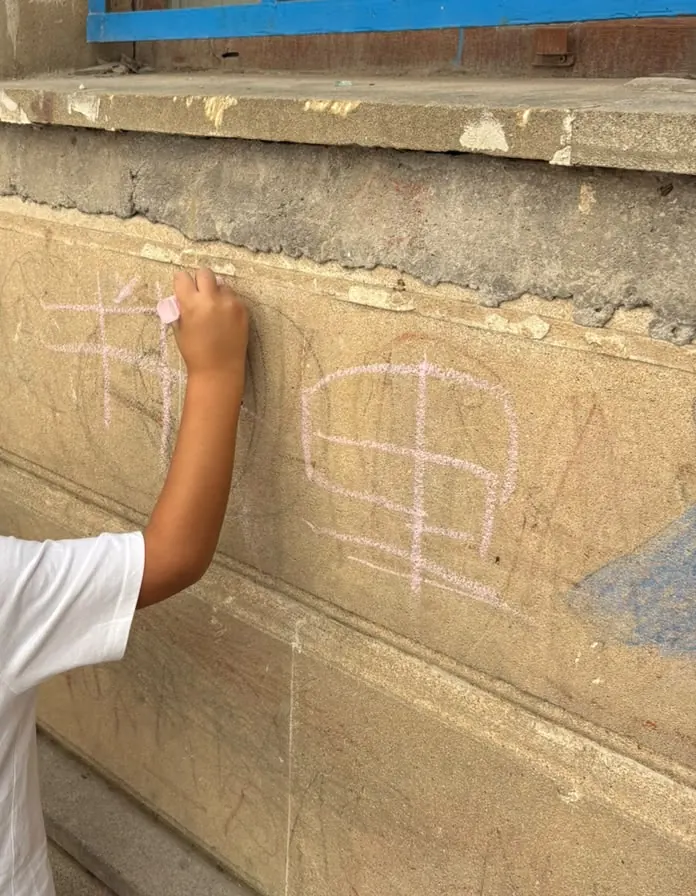
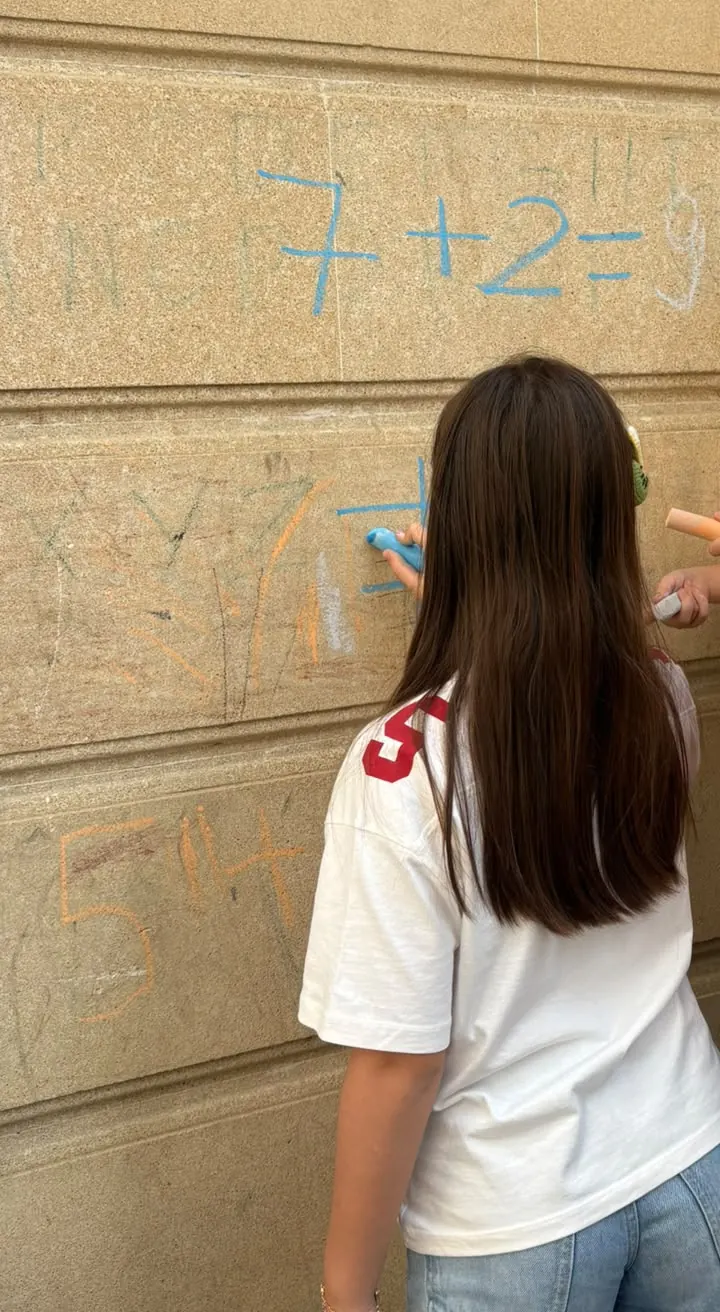
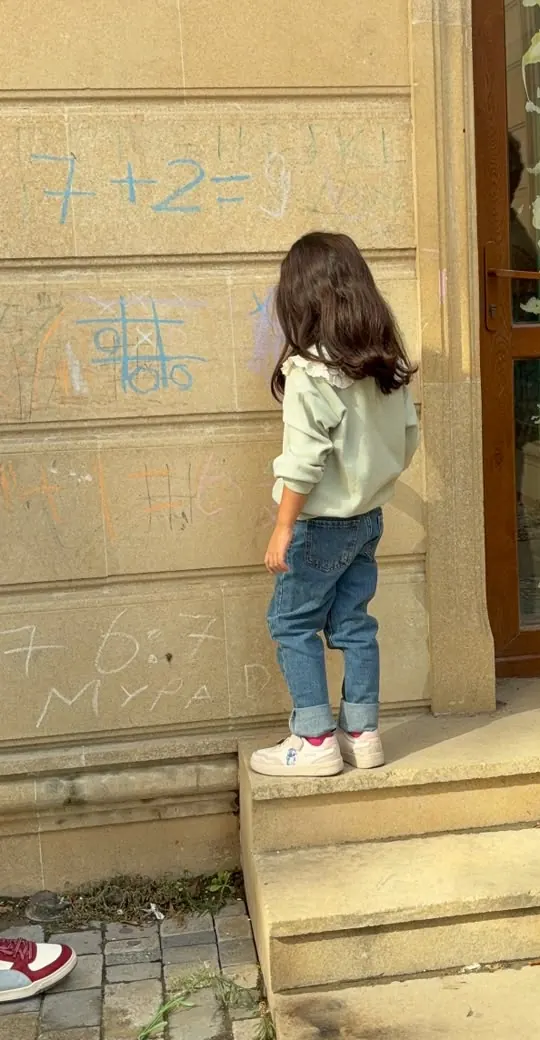
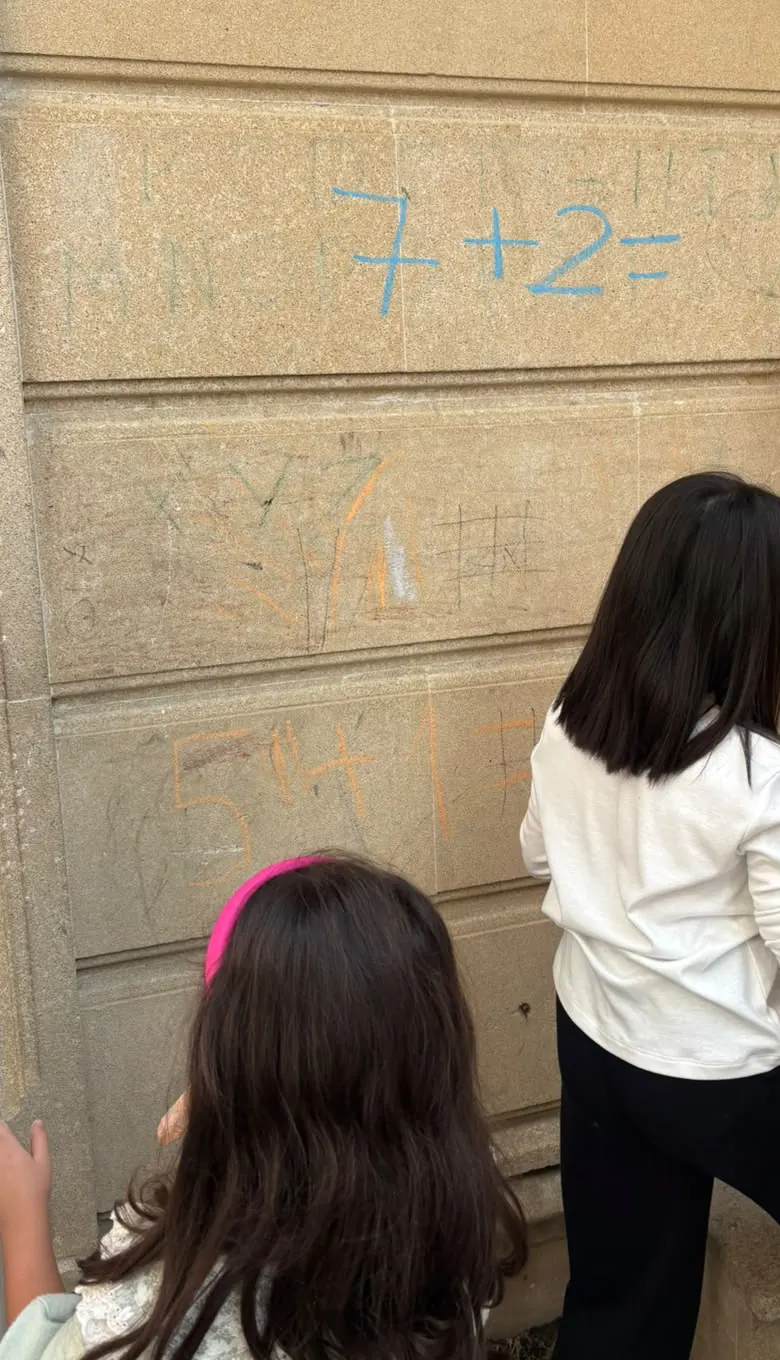
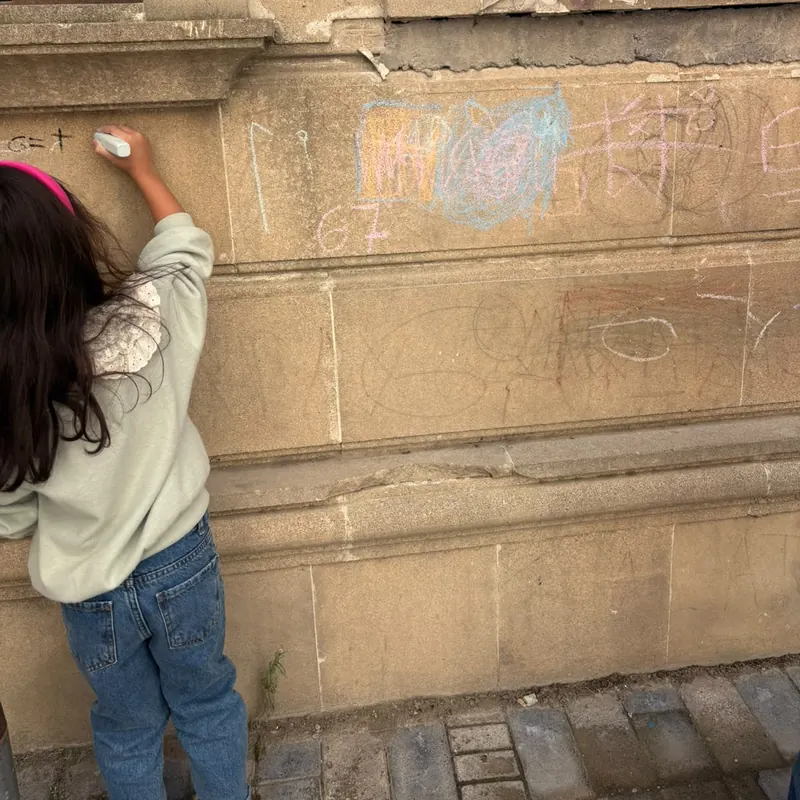
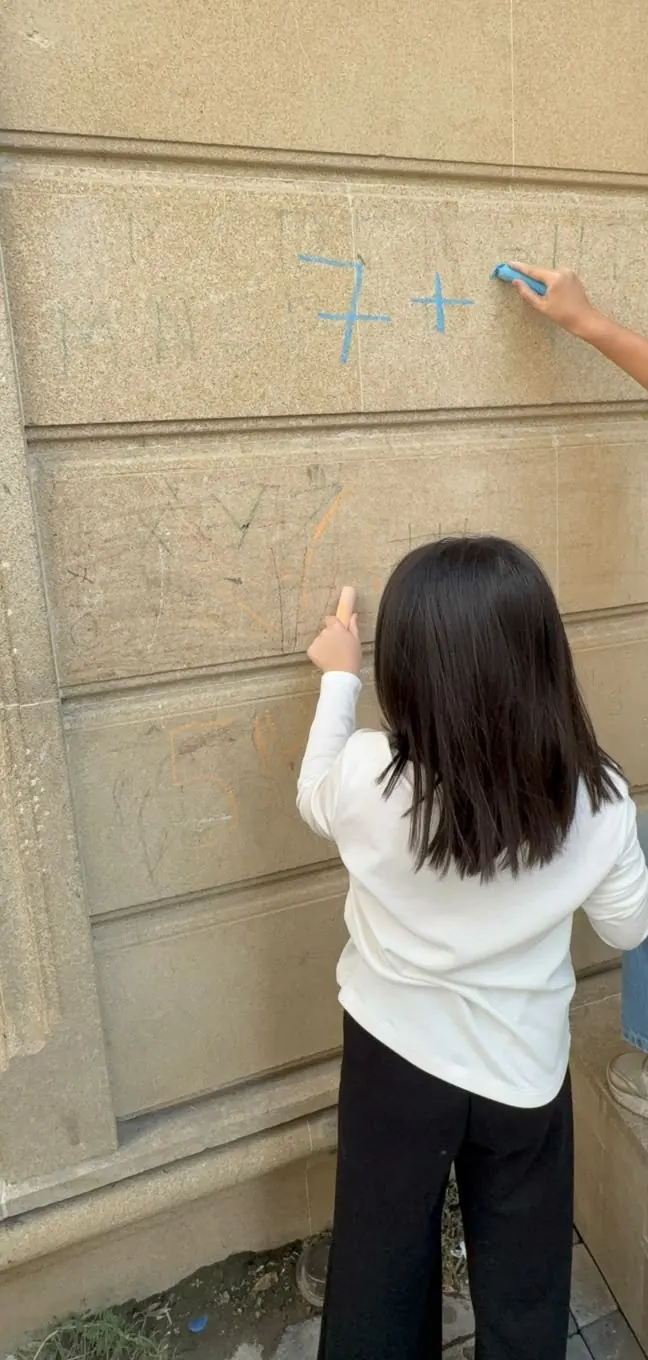
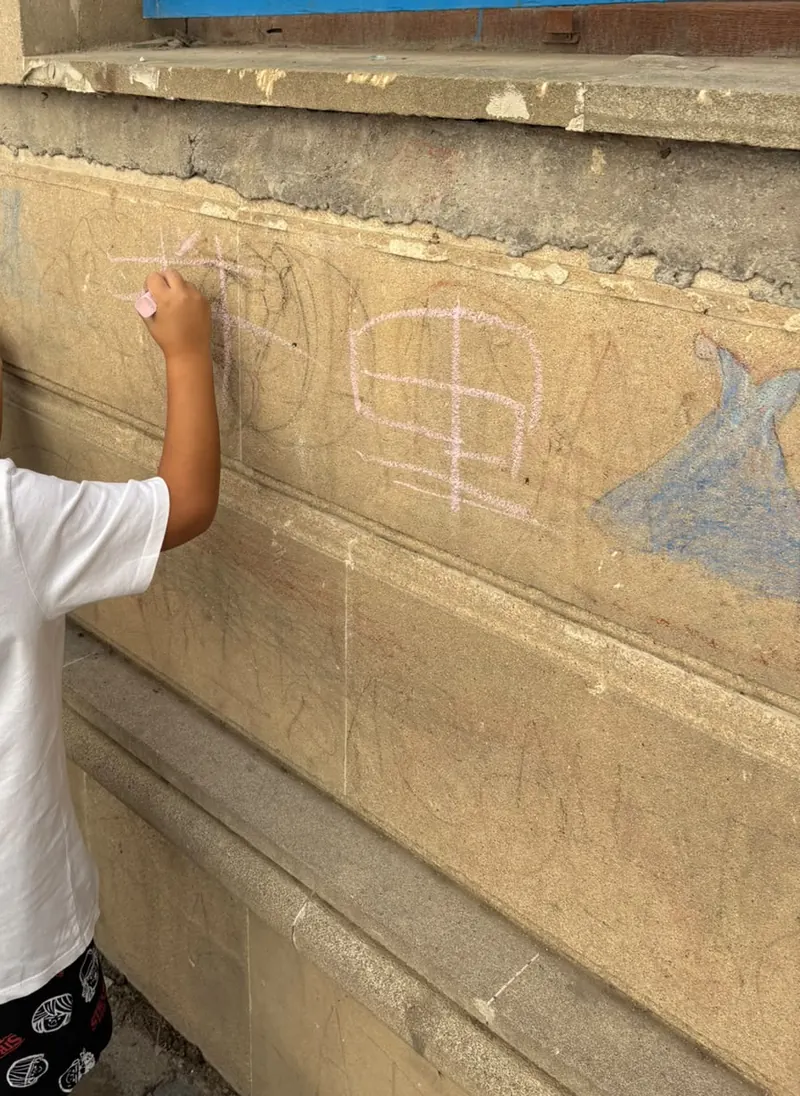
Cards to color in, sums in chalk, a game of noughts and crosses on the wall.
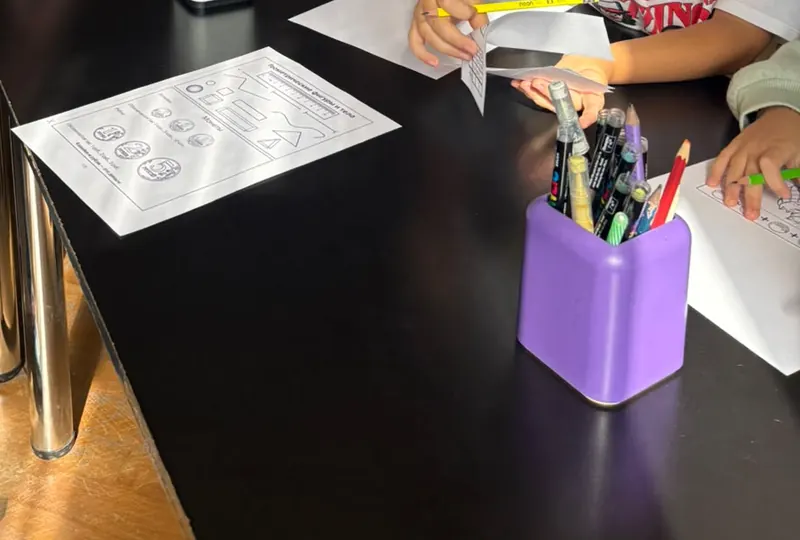
a card, up close 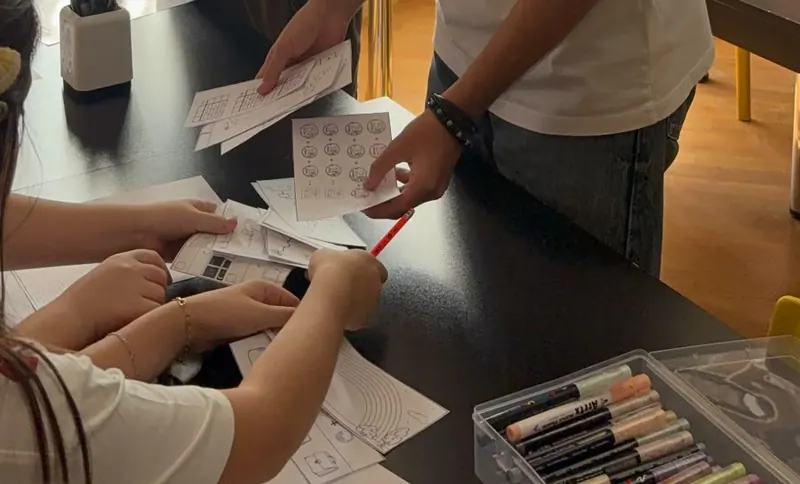
cards change hands 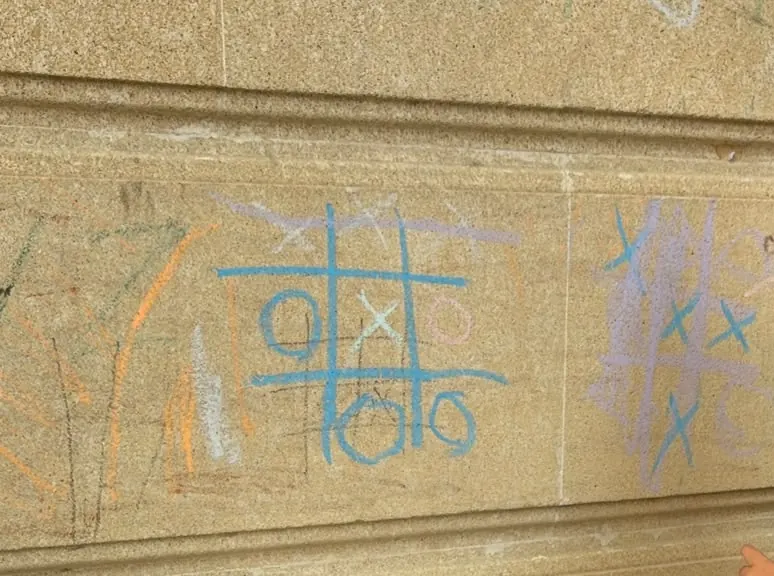
noughts and crosses in chalk 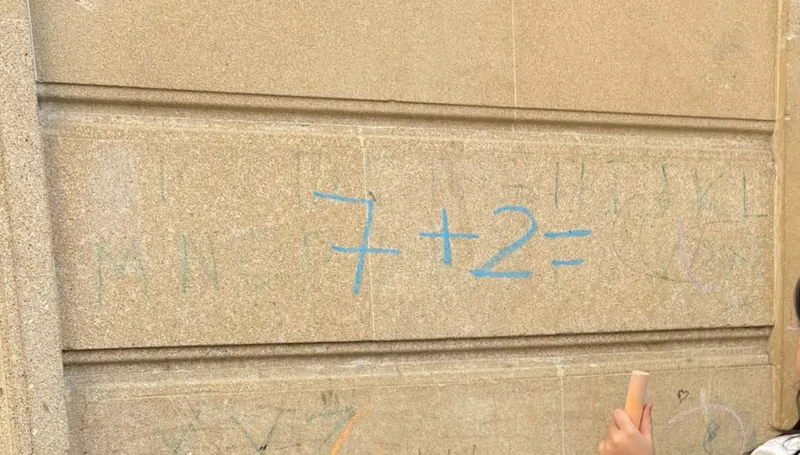
“7 + 2 =” on the wall 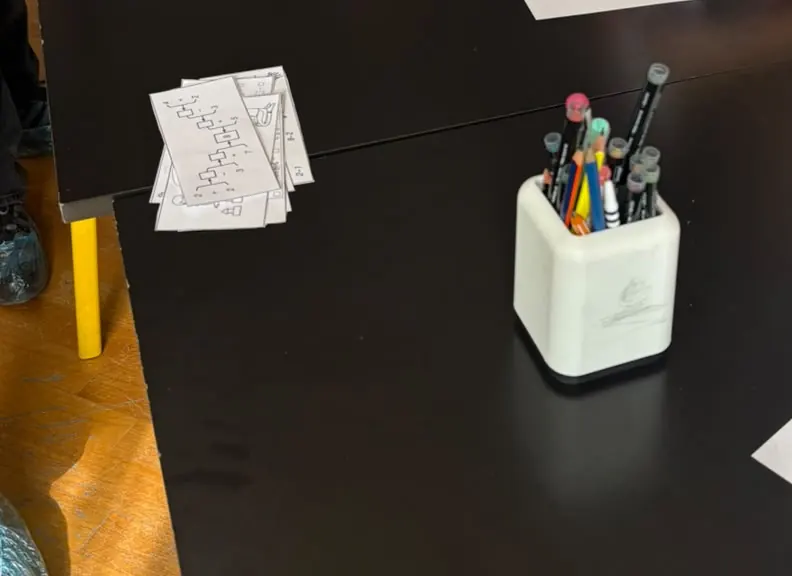
cards waiting their turn
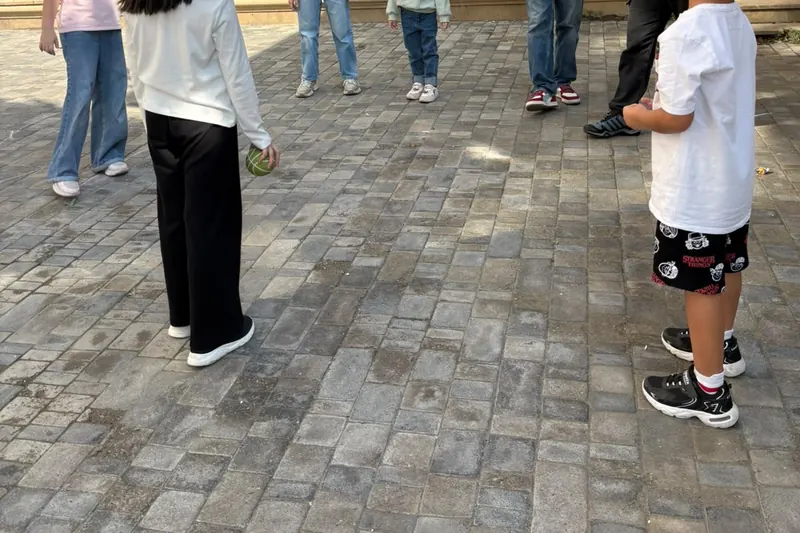
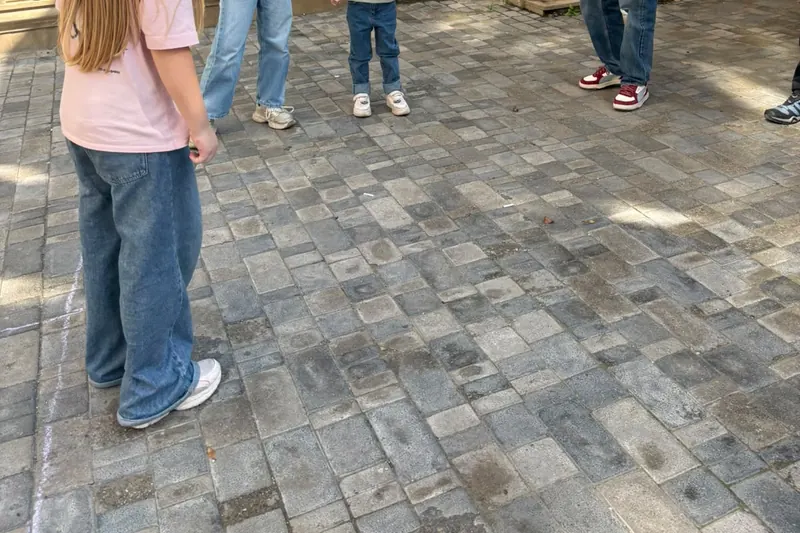
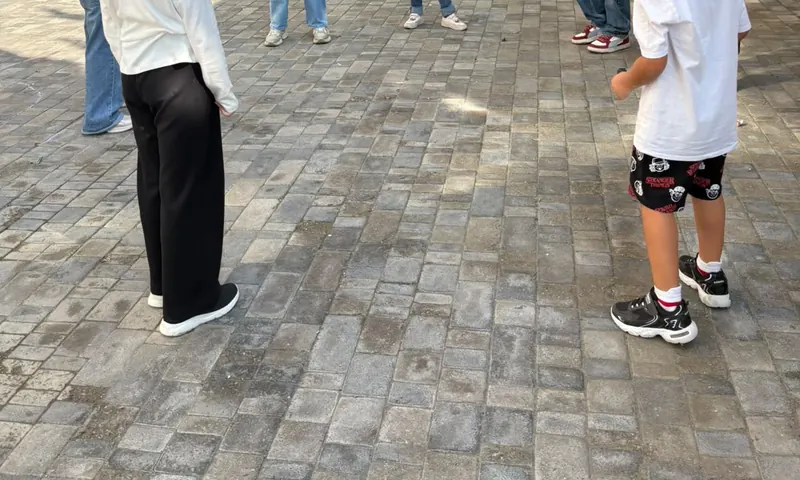
Outside: the ball game
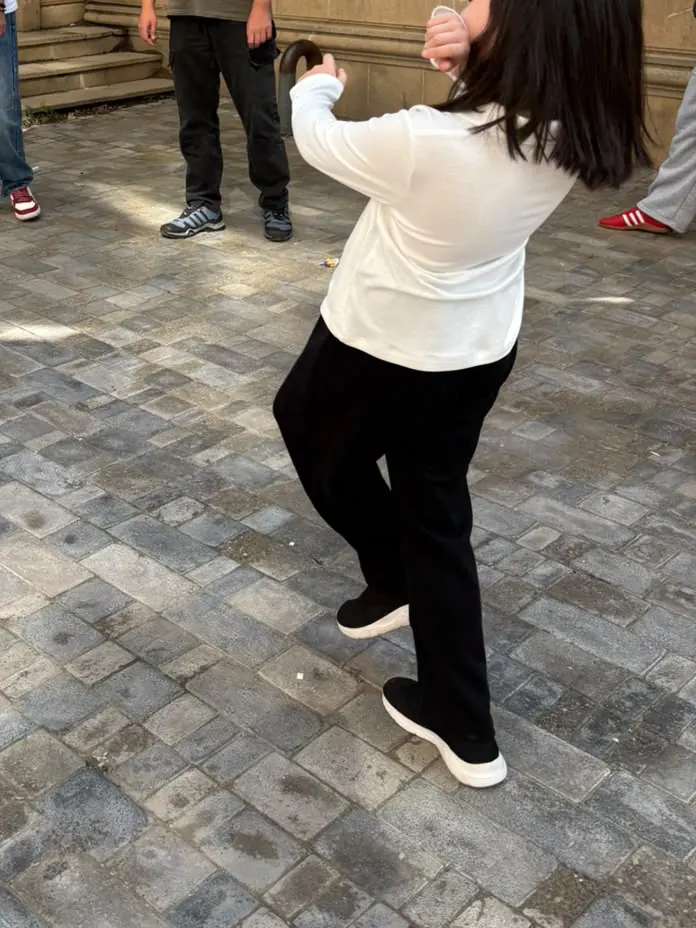
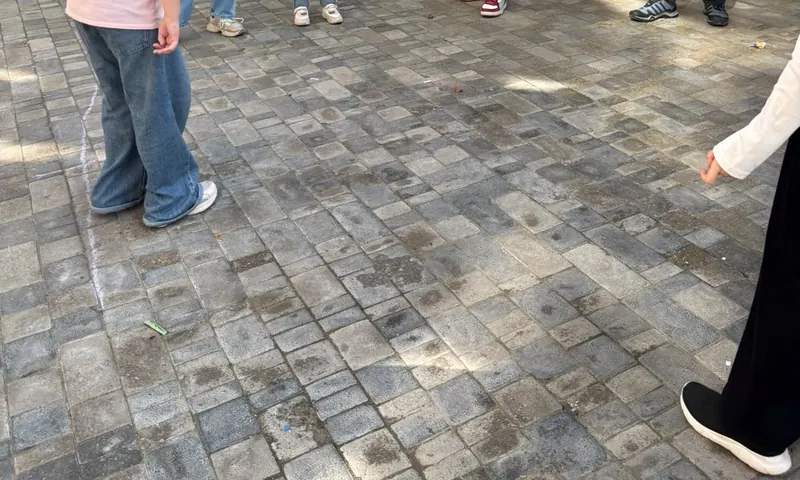
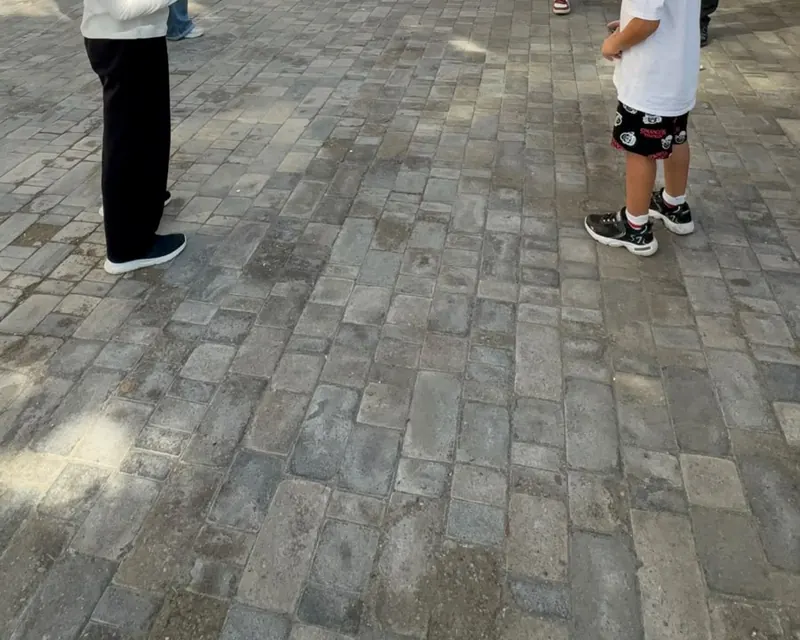
A circle in the courtyard and a ball passing from hand to hand — energy with a direction.
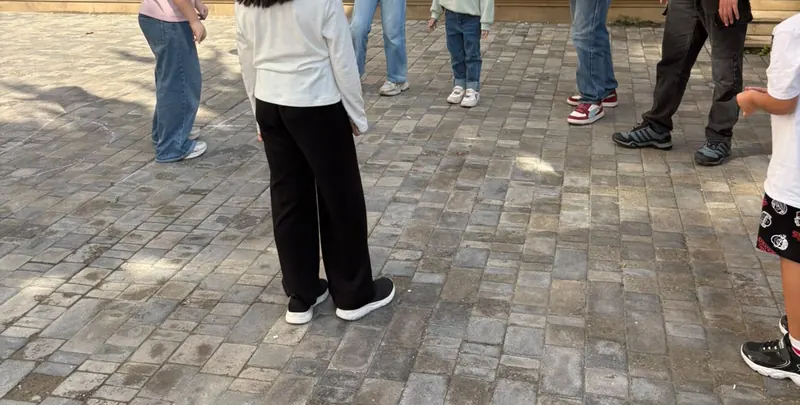
the circle is ready 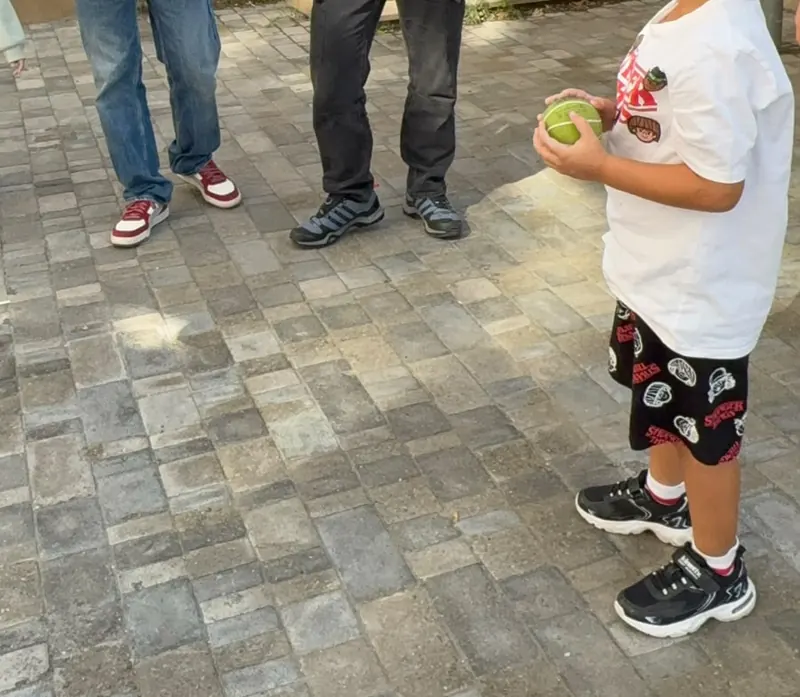
first, get moving got it!
Photo wall
More moments
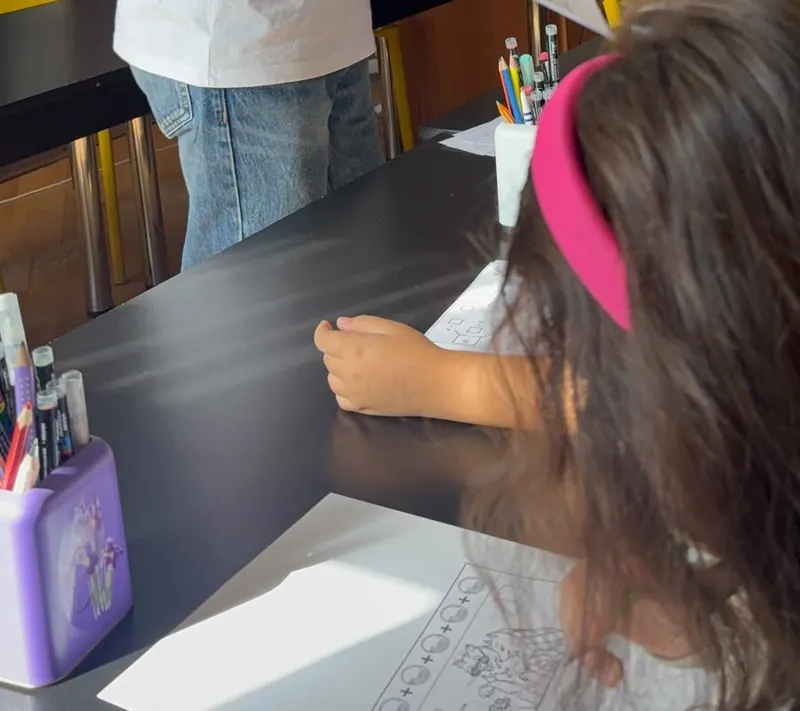
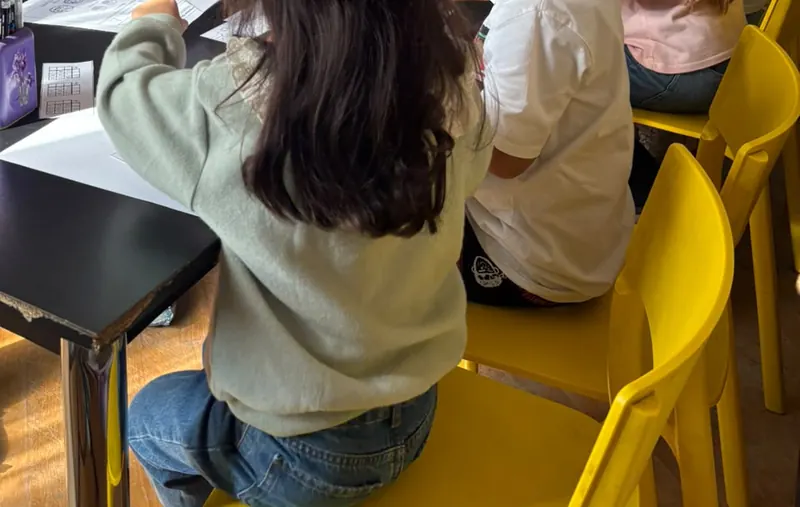
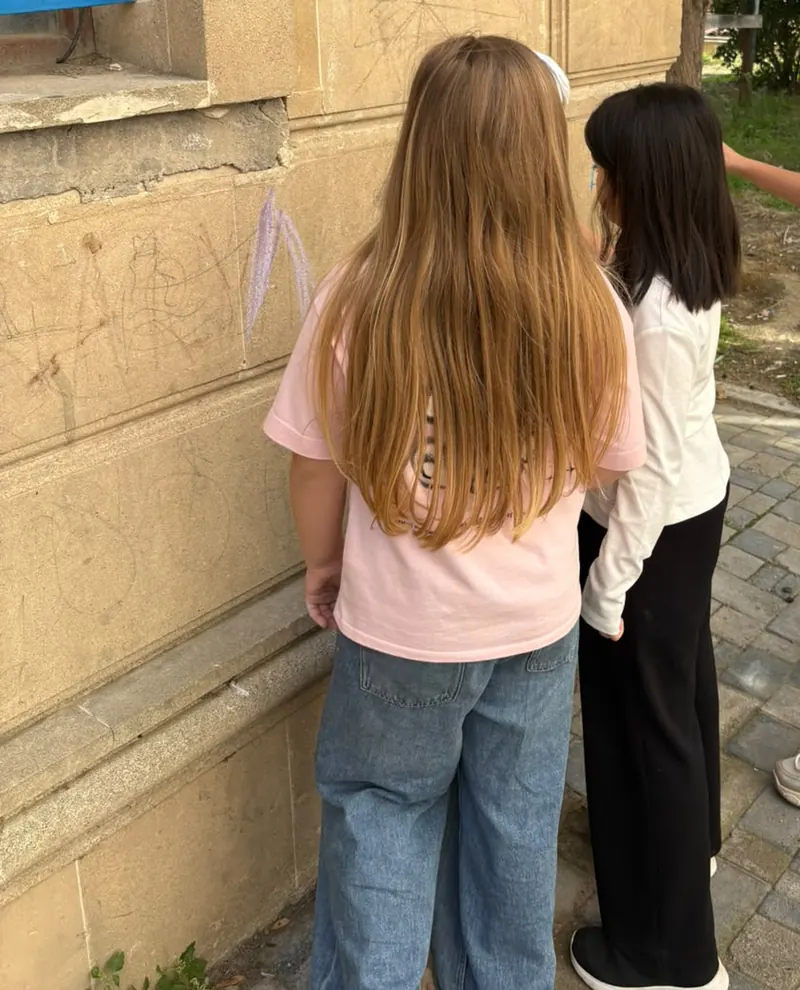
Even more shots from our sessions: at the table, at the wall and in the courtyard. Children's faces are deliberately left out of the frame.
In motion
Math on walls and pavements
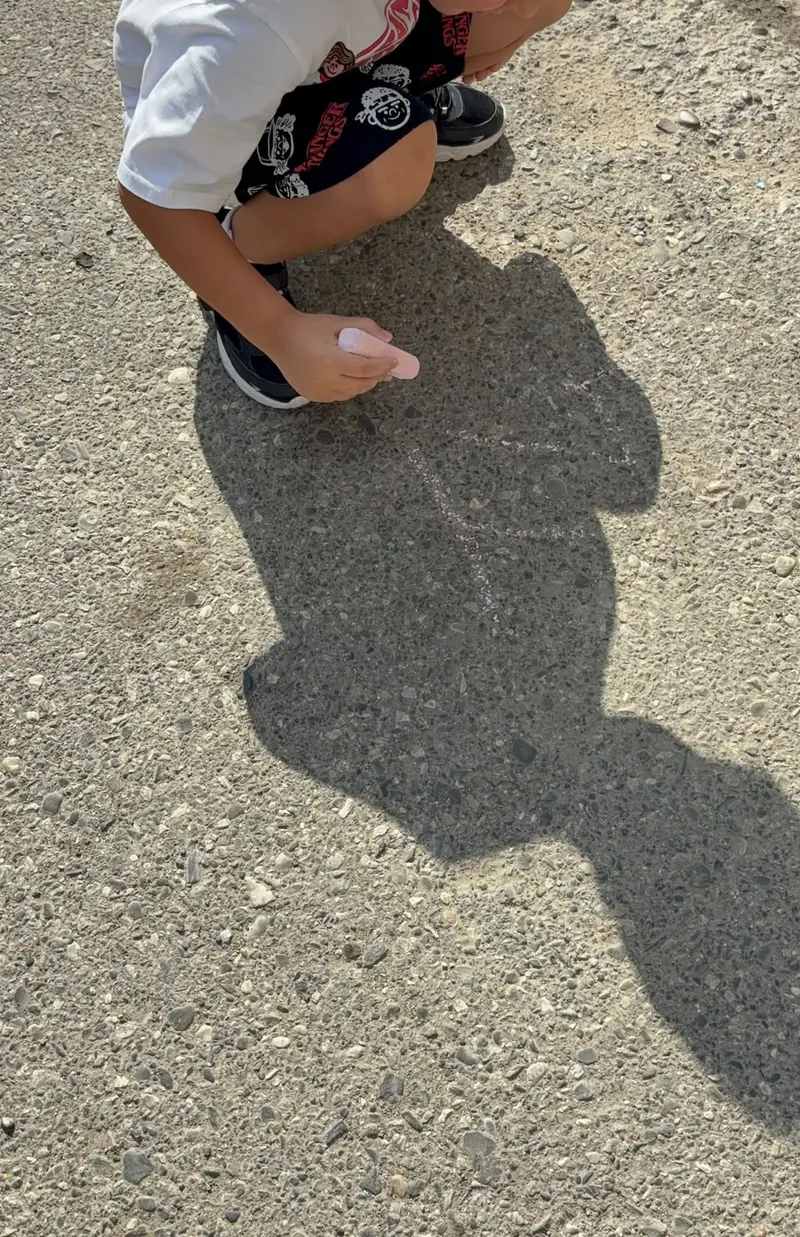
Short clips with no sound. Press play when you're ready: nothing starts on its own.
A mentor and a girl write a sum on the wall in chalk Chalk drawings on an old stone wall Two children working side by side at the wall Drawing in chalk on the pavement
Where we are
The first part of the route is behind us
Over several months, MathRoutes went from an idea and a set of cards to real sessions with children. Here is what comes next.
-
Done
An idea and a set of cards
The program concept and the first set of cards are ready.
-
Done
Sessions with children
Over several months, the cards were used in sessions with children — at the table, at the wall and in the courtyard.
-
Next step
Improving the cards
Reworking the cards based on feedback from children, mentors and teachers.
-
Later
Free for everyone
Publishing all the cards free of charge, together with a guide for mentors — for teachers and parents, in every home and every classroom.
Why it matters
“I'm just not good at math”
We've all seen this child. Sitting at the back, twirling a pen, gazing out of the window, flinching when the teacher calls their name.
And one day they tell themselves: “I'm just not good at math.”
That sentence is frightening because the child believes it — and carries it for years, drifting away from math, then from science, and maybe from their dream.
Yet somewhere inside that hurricane there may be a future engineer, scientist or inventor. Our goal is that no child ever has to say that sentence.
The problem isn't the child. It's the path we offer them.
Questions
Frequently asked questions
- Is it free?
- Yes. MathRoutes is a free, non-profit educational project. Once the cards are ready, they'll be published free of charge together with a guide for mentors.
- What age is it for?
- Children aged 7 to 9.
- Does a child need an ADHD diagnosis to take part?
- The participation criteria are agreed with the center where the sessions take place.
- Is this a treatment?
- No. MathRoutes is an educational program. It is not a medical or therapeutic service and does not replace advice from a specialist.
- Who runs the sessions?
- Trained school-age mentors, with a teacher present at every meeting.
- When can we join?
- New sessions will be announced later — follow the project.
- Where can I get the cards?
- Once the cards have been reworked based on feedback, all of them and the mentor's guide will be published free of charge.
Math isn't only numbers. It's thinking, searching, making mistakes and trying again — and, above all, finding your own way. Some walk in a straight line, some run, some leap, some color their way along. But everyone can reach the top.
Every child has their own route through math — and we're making sure no one gets lost along the way.